- HOME
- ABOUT US
-
-
ABOUT US
This is a living forum where individuals, families, and communities across generations come together to exchange wisdom, insight, and experiential learning, with the common goal of preserving integrity, heritage, and vision for the future. This is a convening circle, a place where the wisdom of experience and the passion of loving and living for others thrive together and where discourse serves as an avenue of growth.
-
-
-
-
- WRITINGS
- BLOG
- LIBRARY
- FAMILIES
- COMMUNITY
- CULTURE
-
-
VISUAL ARTS
-
PERFORMING ARTS
-
-
- RESOURCES
- CONTACT




URI BLOG
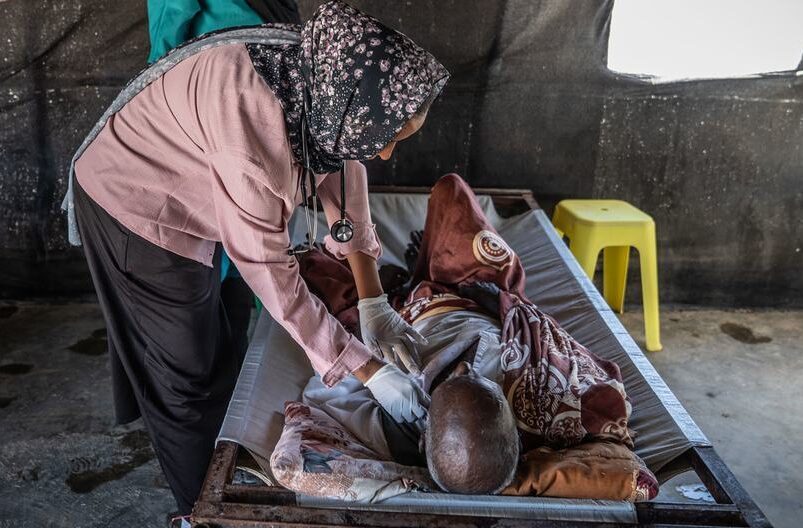
The preventable but often deadly waterborne disease – cholera – continues to spread around the world, driven by conflict and poverty, the UN World Health Organization (WHO) said on Friday.
So far this year, cholera has killed more than 4,300 people across 31 countries. These figures are underestimates and there is particular concern for those impacted by war in Sudan, Chad, the Democratic Republic of the Congo, South Sudan and Yemen.
In Sudan, the disease has already claimed over 1,000 lives since 1 January. It has reached every state in the country, one year after the outbreak started, according to WHO.
Cases rise in war-torn Darfur
With the sub-Saharan rainy season now underway, the UN agency is worried about a spike in the waterborne disease, linked to the huge numbers of people fleeing ongoing violence.
“While cases have plateaued or decreased in some areas, including Khartoum, they are rising in the Darfur region and neighboring Chad. In Tawila, North Darfur,” said WHO’s Kathryn Alberti.
Refugees have quadrupled the population from close to 200,000 to over 800,000, causing immense strain on water and sanitation systems, she added.
“People have as little as three litres of water daily and this is for cooking, washing, cleaning and drinking.”
To respond to the problem, WHO and partners have set up task forces, deployed rapid response teams for surveillance and stockpiled essential cholera supplies in Darfur – although “large parts” of Darfur and Kordofan remain unreachable.
Humanitarian needs keep growing in Afghanistan
Four years after the de-facto Taliban regime took over Afghanistan, more than half of the population needs vital aid, according to the UN humanitarian office (OCHA).
Women and girls are particularly vulnerable due to the increasingly restrictive policies that Taliban authorities have imposed, excluding them from education, the workforce and public life.
1.7 million returnees
OCHA also warned that the return of 1.7 million Afghan citizens from Iran and Pakistan this year has further increased humanitarian needs, as most have limited community ties and are struggling to find shelter and ways of making a living.
To support the response of the under-resourced host communities, the UN Central Emergency Response Fund (CERF) recently released $10 million, and additional funding is in the pipeline from the Afghanistan Humanitarian Fund.
But more resources are urgently needed. This year’s Humanitarian Needs and Response Plan in Afghanistan is just 25 per cent funded, with $624 million received of the $2.4 billion that are needed, and another influx of refugees is expected ahead of Pakistan’s 1 September deadline for Afghan Proof of Registration cardholders to exit.
Insecurity also rising in DR Congo’s restive east
In the war-torn eastern parts Democratic Republic of the Congo, OCHA says insecurity is on the rise in Djigu territory, in Ituri province.
Clashes between multiple armed groups and the Congolese armed forces in several areas has resulted in nearly 50 civilian deaths and more than 30 injuries in the past month alone there.
In the same period, violence and insecurity have led to the displacement of more than 80,000 people in Djugu.
In the attacks, homes were looted or burned, and those who fled are now sheltering in schools, churches and other public buildings.
Targeted killings
There have been three targeted attacks on sites hosting internally displaced people.
These clashes have severely limited humanitarian access, depriving around 250,000 people of essential services. In the Nizi health district in the Ituri territory, nine out of 12 health facilities are now out of service.
The UN and its humanitarian partners are ready to respond, but they need unimpeded, safe access to do so.
“All parties must take urgent measures to protect civilians and facilitate humanitarian access. Civilians must be protected at all times, in line with international law,” stressed Mr. Dujarric on Friday.
♦ FAQ
♦ BLOG
♦ Volunteer
♦ Contact Us
♦ Donate
♦ Article Submission Policy
♦ Cookie Policy
♦ Privacy Policy